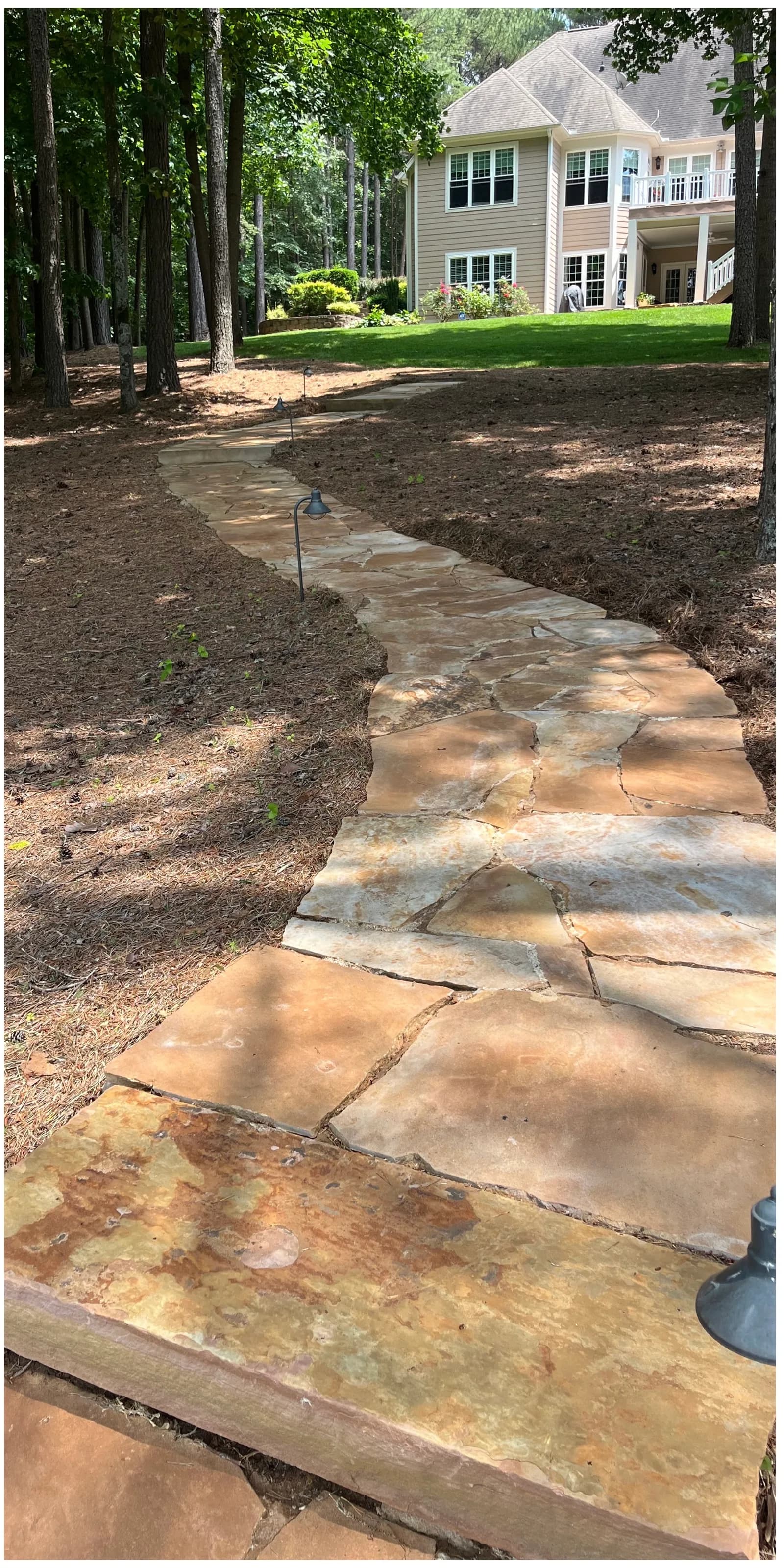
A paver patio, walkway, or driveway is one of the best-looking hardscape choices a Denver, NC homeowner can make, and one of the easiest to neglect without realizing it. Pavers are not a single poured slab. They are individual units locked together by sand in the joints, and that joint sand is exactly what our Lake Norman climate works hardest to wash away. Once the joints thin out, weeds move in, the pavers start to shift, and the whole surface looks tired years before it should.
This guide walks through why Denver pavers deteriorate faster than most homeowners expect, what a proper paver service actually includes beyond a quick rinse, how often a 28037 patio or driveway should be cleaned and resealed, the warning signs that mean it is time to act, and when it makes sense to hand the job to a local pro.
Why Denver, NC pavers deteriorate faster than you expect
Denver sits in a pocket of Lincoln County where lake humidity, clay-heavy soil, and heavy pollen all work against a paver surface at once. A few local factors stack up faster than most homeowners realize:
- Joint sand erosion. Every hard rain and every pass of a garden hose or rented pressure washer carries fine joint sand out of the gaps. As the sand drops, the pavers lose their lock and begin to rock, tilt, and separate.
- Weeds and moss in the joints. Once the sand thins out, seeds and spores settle into the gaps. Shaded patios on the older tree-covered lots near East Lincoln and Verdict Ridge grow moss and weeds in the joints within a single season.
- Red-clay staining. Denver's clay-heavy soil washes across hardscape in every storm and tints light-colored pavers a stubborn pink-orange that stands out badly against the pale stone popular in Westport and Smithstone.
- Lake Norman humidity. Damp joints near the shoreline do not dry out between storms, so moss and algae keep a steady foothold instead of dying back in the heat.
- Efflorescence. Concrete pavers can push a white, chalky mineral haze to the surface as they cure and as moisture moves through them. It looks like a permanent stain but responds to the right cleaner.
Cleaning, sanding, and sealing: the three parts of paver care
The single most important thing to understand about paver service is that a good cleaning is only the first of three steps. A company that pressure washes your pavers and leaves is actually setting the surface back, because blasting the joints clears out whatever sand was left and speeds up the shifting you are trying to prevent.
A complete paver restoration works in order. First we deep clean the surface to pull out embedded clay, kill moss and weeds at the root, and clear the joints of organic debris. Then we re-sand the joints with polymeric sand, which hardens after it is wetted and locks the pavers back together while resisting weeds. Finally we apply a professional sealer that binds the sand, deepens the color of the stone, and shields the surface from clay stains, oil, and moisture.
Skipping any one of those steps shortens the life of the whole system. Our paver cleaning, sealing, and sanding service is built around doing all three in the right order so the surface stays locked, stain-resistant, and weed-free instead of just briefly clean.
How often should you clean and reseal pavers in Denver?
For most Denver homes, a cleaning once a year keeps clay film, moss, and weeds from getting a foothold in the joints. On that schedule the surface never builds the deep staining and heavy weed growth that take aggressive work to reverse.
Resealing runs on a longer cycle. A quality sealer on a Denver paver patio or driveway typically lasts two to three years before it wears thin and the pavers start absorbing stains again. Surfaces in heavy sun, like a south-facing driveway off NC-16, and high-traffic areas near the garage tend to land at the shorter end of that range.
If your pavers sit under heavy shade, back up to woods, or run near a downspout that dumps water across the joints, plan on the shorter end for both cleaning and sealing. Shade and standing water grow moss and wash out sand faster than an open, well-drained patio. If you are not sure what your surface needs, we are happy to take a look during a free estimate.
Warning signs your Denver pavers need service now
You do not have to wait for the calendar. These are the signs we see most often on Denver pavers that are ready for a full service:
- Weeds or grass sprouting up through the joints between pavers.
- Green or black moss spreading across shaded sections, which gets slippery underfoot when wet.
- Joints that look low, empty, or washed out compared to when the pavers were installed.
- Individual pavers that rock, tilt, or sit unevenly when you step on them.
- A pink-orange clay film or a white efflorescence haze dulling the color of the stone.
- Water pooling on the surface or in the joints instead of draining cleanly after a rain.
DIY versus hiring a local pro
Plenty of Denver homeowners rent a machine and blast their own pavers, and the surface does look better for a few weeks. The problem is what a rented pressure washer does to the joints. A point-tip wand strips the remaining sand out of the gaps, and without a proper re-sand and seal afterward the pavers are left looser and more weed-prone than before the cleaning started.
A pro brings the full sequence: the right chemistry to lift clay and kill moss at the root, controlled cleaning that does not scour the pavers themselves, fresh polymeric sand worked into every joint, and a sealer matched to your stone. That is the difference between a surface that looks new for a weekend and one that stays locked and protected for years. Our before and after gallery shows how much a complete clean, sand, and seal changes a tired paver patio.
What our Denver paver cleaning includes
Our paver cleaning, sealing, and sanding service is a complete restoration, not a quick rinse. We deep clean the surface to remove embedded clay, oil, and organic staining, kill moss and weeds at the root, refill the joints with polymeric sand that hardens and resists regrowth, and apply a professional sealer that locks the sand, enriches the color, and protects against future staining. Stand Out Exterior Cleaning is a locally owned company headquartered right here in Denver, NC, and our crews work the 28037 ZIP every week.
Most Denver homeowners have us handle the surrounding hardscape and siding at the same visit, since the same clay and humidity that stain the pavers tend to green up the house siding and build up on the concrete driveway on the same schedule. For the full picture of how we serve the area, see our Denver, NC service page, or request a free estimate and we will walk the property with you and give you an exact number before any work starts.