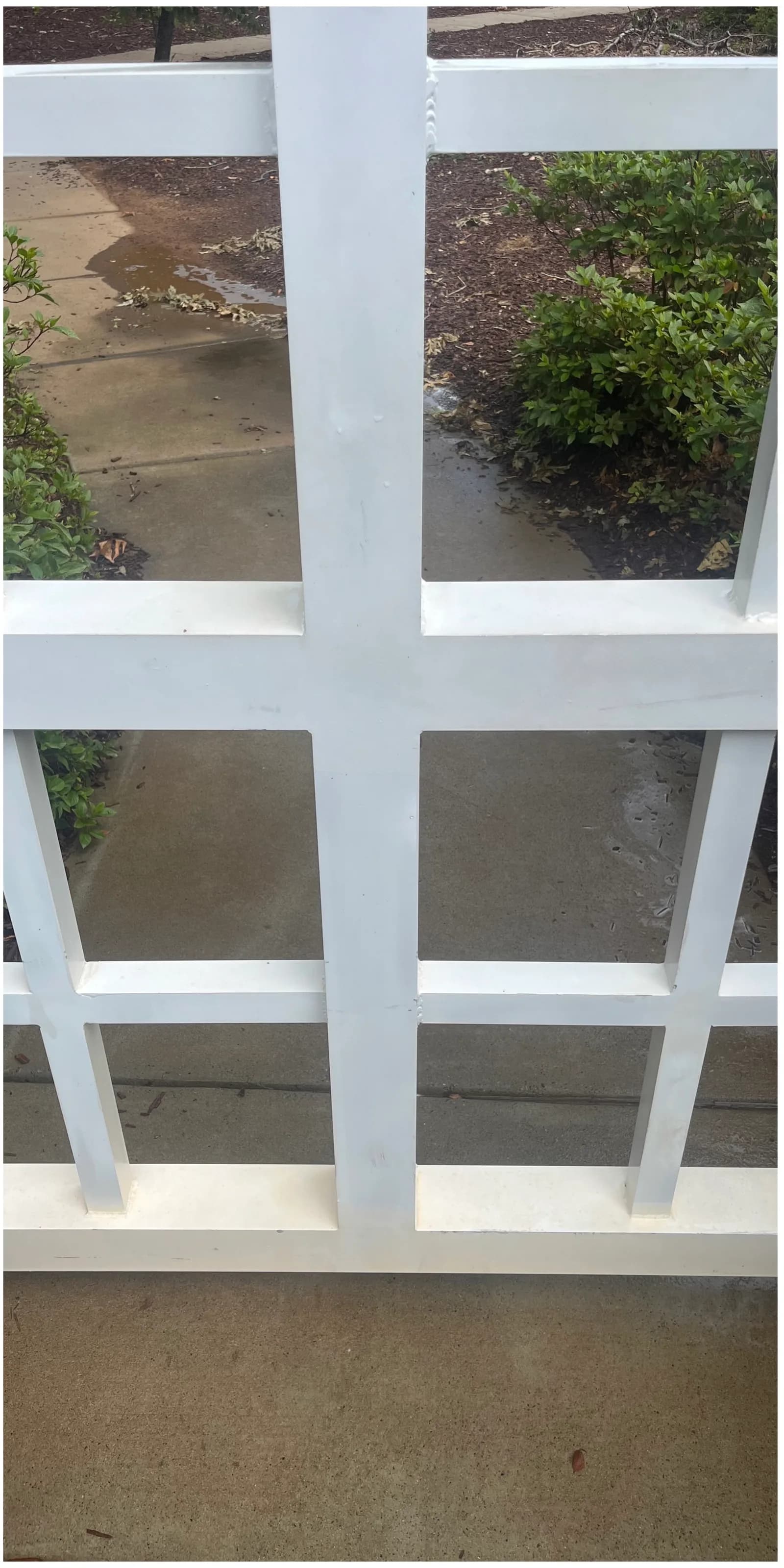
If you own a fence in Mooresville, NC, you already know it takes a beating. The steady humidity that rises off Lake Norman, the spring pollen from the hardwoods along Brawley School Road, and the fine red-clay dust that coats everything from late summer through fall all push their way into fence panels, rails, and posts. Vinyl goes from bright white to a dingy gray-green. Wood boards develop a dark mildew stain that no garden-hose rinse touches. Aluminum develops oxidation runs that streak the surface brown.
This guide walks through how fence washing works in Mooresville, what you should expect based on your fence material, how often to schedule it, and when hiring a local pro pays off over doing it yourself.
Why Mooresville fences get dirty faster than most
Mooresville sits along the eastern shore of Lake Norman, and that combination of lake moisture, heavy tree cover, and clay-heavy Iredell County soil stacks up against fences in a way most inland markets never see.
- Lake humidity. The constant moisture off the lake keeps fence surfaces damp longer than inland areas. Damp surfaces grow algae and mildew faster, especially on north-facing panels that never fully dry between dew and rain cycles.
- Spring pollen. The pollen season deposits a thick yellow-green film on every horizontal surface - fence tops and rails hold it better than a car hood. That film mixes with morning dew and turns into a sticky paste that traps grit.
- Red-clay grit. The clay-heavy soil in Iredell County kicks up fine particles with every rain. Clay embeds in textured vinyl and settles into wood grain, turning what looks like a surface stain into something that needs real cleaning chemistry to lift.
- Shade from tree cover. Neighborhoods like Morrison Plantation and Bridgeport have heavy canopy. Fences running under tall oaks and pines stay shaded and damp long enough that mold gets a head start every spring.
Vinyl, wood, and aluminum: matching the method to the material
The biggest mistake homeowners make is using the same pressure on every fence type. High-pressure washing works on a concrete driveway. The same pressure on a wood fence raises the grain, blows out soft spots around knots, and forces water deep into the wood where it speeds up rot - the opposite of what you want.
Vinyl fences respond best to a soft-wash approach: low pressure plus a surfactant-based cleaning solution that kills mold and lifts oxidation without stressing the material. The result stays cleaner longer because the mold is dead at the root, not just rinsed off the surface.
Wood fences need a carefully controlled low-pressure rinse with a wood-safe cleaning agent. The goal is to lift surface mildew and gray weathering without opening up the grain. When a wood fence is also due for staining or sealing, washing is the required first step - stain will not adhere properly over mold, dirt, or oxidized wood fibers.
Aluminum fences develop a chalky oxidation layer over time that shows as white or brown streaking. A degreaser-based solution followed by a low-pressure rinse pulls that oxidation off and restores the original surface. Wire-brush attempts to do the same thing usually just scratch the powder coating.
How often to wash your fence in Mooresville
For most Mooresville homes, once a year is the right starting point. An annual wash in late spring - after the worst of pollen season - knocks out the winter mold and the pollen buildup at the same time.
If your fence runs along a tree line, backs up to a wooded buffer, or sits close to the lake shore, plan on twice a year. The combination of shade and humidity that accelerates mold growth is hard to stay ahead of with a single annual visit.
Wood fences on a two- or three-year staining and sealing cycle should be washed every time you plan to refinish them, regardless of how they look. Stain applied over an unclean surface peels within a season.
What fence washing does beyond the obvious curb appeal
Fence washing is not just cosmetic, although the before-and-after difference is dramatic on its own. A professional cleaning kills the mold and algae at the root rather than just rinsing the surface, so the regrowth timeline is significantly longer. For a side-by-side look at the difference a cleaning makes, take a look at our before and after gallery.
For wood fences specifically, removing mildew and gray weathering slows long-term deterioration. Mold and trapped moisture are the primary drivers of rot, and a fence kept clean and properly sealed can last decades longer than one that is left to weather through Mooresville's humid summers.
There is also a prep benefit. If you are planning to stain, seal, or paint your fence in the next year, professional washing removes the surface contamination that causes finish failure. Skipping that step and staining over a dirty surface is one of the most common reasons a fresh coat peels before the next season.
DIY fence washing versus hiring a pro
A single-story vinyl privacy fence on flat ground is a manageable DIY project if you own an electric pressure washer and keep the pressure at or below 1,200 PSI. Hold the nozzle at a slight angle rather than dead-on, keep it moving, and rinse from top to bottom.
The job gets more complicated on tall fences, wood or aluminum materials, or any fence that runs close to landscaping beds. The wrong pressure on wood or the wrong cleaning solution on painted aluminum is an expensive mistake. A long fence run also adds up in time and ladder repositioning in a way most homeowners underestimate on a Saturday morning.
A licensed pro also brings the right chemical mix for the material. Our fence washing service uses material-matched solutions, so you are not gambling that hardware-store soap works on your specific fence type. The job typically takes a fraction of the time it takes a homeowner on a ladder, and the result is more thorough.
What our Mooresville fence washing includes
Our fence washing visits start with a pre-treatment that breaks down mold and pollen before any pressure is applied. We match the pressure and cleaning solution to the specific material - low-pressure soft wash for vinyl, wood-safe chemistry for stained or painted boards, and degreaser rinse for aluminum and wrought iron. We work from top to bottom so clean rinse water never runs over a dirty section twice, and we bag and remove any debris we pull off the surface.
We are a locally owned company based in Denver and we work the Mooresville ZIP codes - 28115 and 28117 - every week, from Brawley School Road and The Point through Morrison Plantation and Bridgeport. For the full picture of what we cover in the area, see our Mooresville, NC service page. When you are ready for an exact price, request a free estimate and we will walk the fence with you before any work starts.