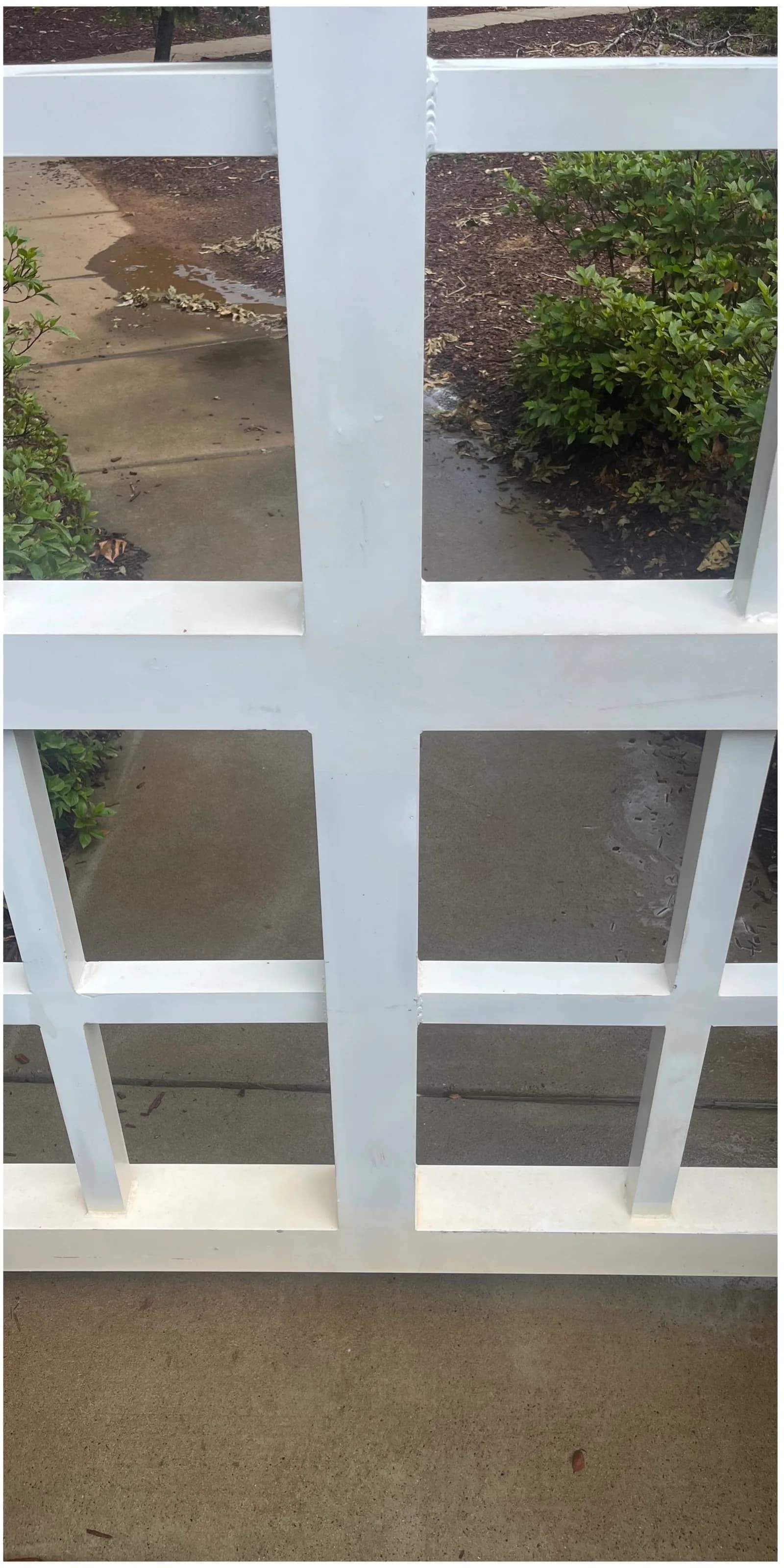
If you own a home in Huntersville, there is a good chance your fence has turned a shade of green or gray it was never supposed to be. Huntersville sits in the northern Mecklenburg County corridor between Lake Norman and Charlotte, and that position gives it some of the heaviest tree canopy and most persistent humidity in the region. Both conditions work against your fence year round.
This guide covers why Huntersville fences stain so fast, how to clean each material correctly without causing damage, why fall is actually the ideal window to schedule the job, and when it makes more sense to call our professional fence washing team rather than renting a machine.
Why Huntersville fences stain faster than most
Several local factors stack up in a way that accelerates staining on every fence material:
- Heavy shade from mature trees. Neighborhoods like Birkdale, Vermillion, and Northstone have dense oak and hardwood canopy. Shaded fence sections stay damp after rain and grow algae and mildew faster than fences in open sun.
- Lake Norman humidity. Huntersville is roughly ten miles from Lake Norman, and the humidity that lifts off the lake keeps outdoor surfaces wet longer than they would be 20 miles inland. That moisture is what algae and mildew need to take hold.
- Red-clay runoff. The soil at the Lincoln and Mecklenburg County border runs heavy with clay. Every storm washes a thin layer of red-clay grit along fence base rails and bottom pickets. Left in place it stains wood pink-orange and makes vinyl look perpetually dirty.
- Oak tannin drop. The same mature oaks that provide shade drop tannin-heavy leaves each fall. Those leaves rot against fence boards and deposit dark brown stains that are harder to remove than algae.
- High pollen load. Huntersville's spring pollen season coats every outdoor surface in a fine film. On fences it mixes with morning dew and dries into a gritty paste that sits in the grain of wood and the texture of vinyl.
The right cleaning method for each fence material
Using the wrong pressure or the wrong technique on a fence is one of the fastest ways to cause expensive damage. Here is what works on each common Huntersville fence type:
- Wood fences. Pressure washing with too much force splits boards, opens the grain, and drives water deep into the wood where it accelerates rot. Wood fences need a soft wash - low pressure plus a biodegradable surfactant that kills algae and mildew at the root without blowing the grain apart.
- Vinyl fences. Vinyl can handle light to moderate pressure but benefits most from a soft-wash approach that kills the green-black algae coating rather than just rinsing it off the surface temporarily. High pressure can stress the joints and brackets on older vinyl panels.
- Aluminum and ornamental iron. These fences get low to moderate pressure with care around the powder-coat finish. Harsh pressure or the wrong chemistry strips the coating and accelerates rust.
- Chain-link. Chain-link tolerates higher pressure than most other fence types, but posts and bottom rails are still rust-prone. After cleaning, rinsing thoroughly and letting the metal dry before any surface treatment prevents rust from advancing.
Why fall is the best time to wash your fence in Huntersville
Fall is the best window for fence washing in the Huntersville area for a few practical reasons. The algae and mildew that built up through the humid summer months are still soft and easy to remove before a winter freeze locks them into the surface. A thorough fall cleaning also removes the tannin and debris from the first round of leaf drop before it has time to stain.
If you have a wood fence you plan to stain or seal, fall cleaning makes that job straightforward. Soft washing in October gives the wood time to dry fully - usually five to seven days in fall temperatures - before the nighttime lows drop below the 50 degrees Fahrenheit threshold where most exterior wood stains stop curing properly. Clean now, wait for dry weather, and stain before the cold settles in.
A fall fence wash also pairs naturally with other exterior jobs. Most Huntersville homeowners have us handle the fence alongside a full house washing or a gutter cleaning so the whole exterior is set for winter in a single visit.
Warning signs your fence needs washing now
You do not need to wait for the calendar to tell you a cleaning is overdue. These are the most common signs we find on Huntersville fences that have gone too long:
- Green, gray, or black staining on pickets or rails - algae and mildew from shade and humidity.
- A slippery or slimy feel when you run your hand along vinyl or composite sections.
- Tiger striping on vinyl fence faces - the dark oxidation streaks that form on the exterior surface.
- Dark tannin stains running down from the top rail or concentrated around fence caps.
- Weeds or moss growing at the base of wood sections, which means the wood has been staying wet.
- A faded, chalky appearance on older vinyl panels caused by UV breakdown and organic buildup.
- Red-clay discoloration on the bottom eight to twelve inches of the fence run.
DIY versus hiring a Huntersville fence washing pro
Plenty of Huntersville homeowners rent a pressure washer and tackle their own fence, and on a simple vinyl fence with moderate staining it can work out. The risk increases fast on wood fences, where a too-strong nozzle setting or a direct-angle spray strips the wood fiber and leaves fray marks that look worse than the original staining. Most rental machines also lack the surfactant delivery system needed for a proper soft wash - they give you high pressure but not the right chemistry to kill algae at the root.
A pro brings the right pressure for each material, biodegradable solutions calibrated for each surface type, and the experience to spot problems like soft spots in fence posts or hanger damage before they turn into replacement costs. If you want to see the kind of results we deliver on Huntersville fences, check our before and after gallery, or read what local homeowners say on our reviews page.
What our Huntersville fence washing service includes
Our fence washing service starts with a pre-treatment spray of biodegradable surfactant across the full fence run. We let it dwell to break down algae, mildew, tannin, and clay film, then rinse at the appropriate pressure for the material - soft for wood, controlled for vinyl and aluminum. All rinse water is directed away from planted beds, and we collect any large debris so it does not end up back in your lawn.
We are locally owned and based right here in the Denver and Lake Norman area, and we work Huntersville jobs every week. For more on how we serve the area, see our Huntersville, NC service page. If you would like to schedule a cleaning or just want a number before committing, request a free estimate online or call us directly. We give every homeowner an exact quote before any work starts.