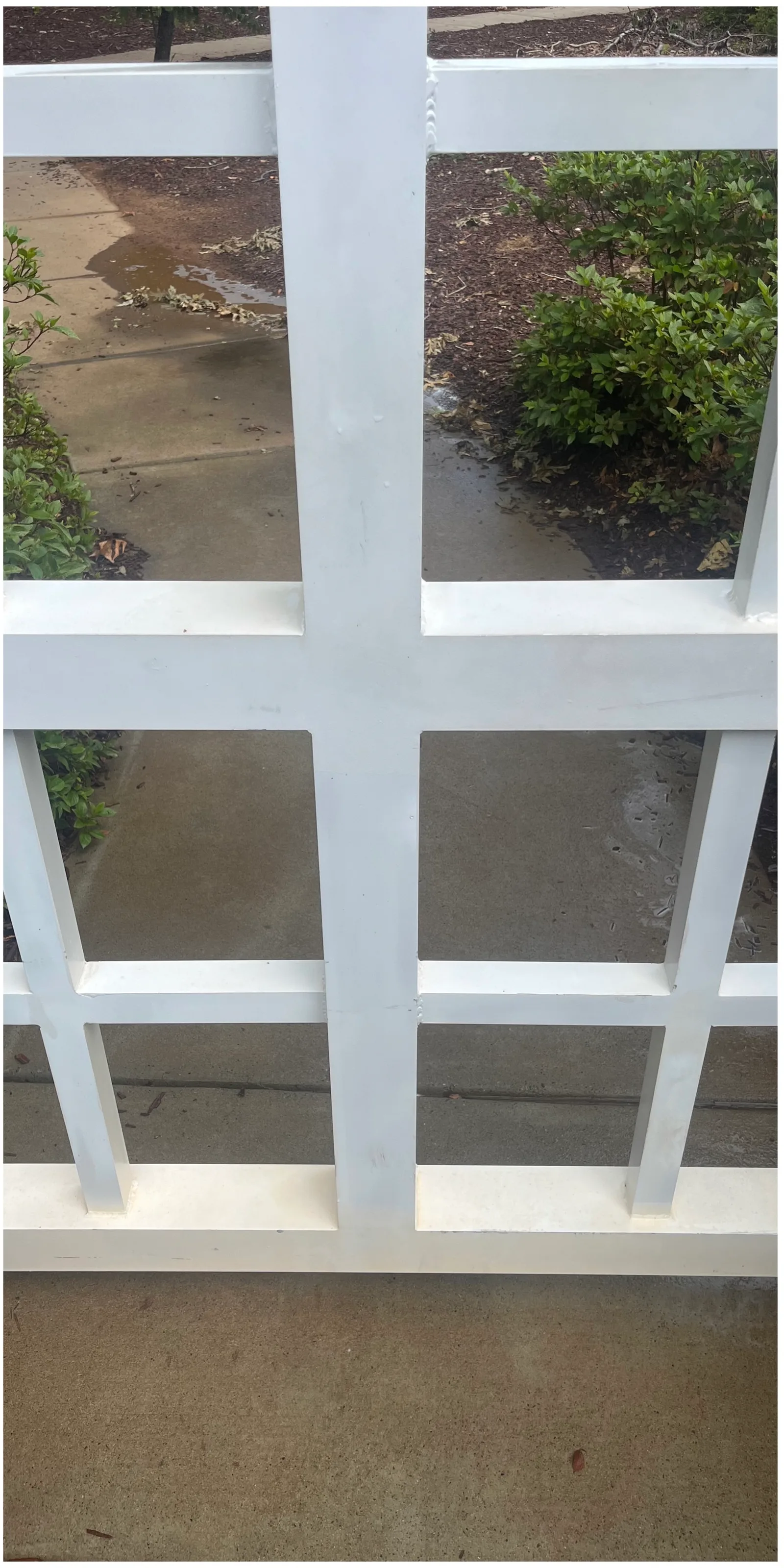
If you own a home in Cornelius, your fence is probably working against the two things that define life out here: Lake Norman humidity and heavy tree shade. Cornelius sits on prime waterfront between Mooresville and Huntersville, and neighborhoods like The Peninsula, Antiquity, and the Jetton Road corridor get some of the most persistent moisture in the entire Lake Norman area. That moisture is exactly what algae and mildew need to take hold on a fence.
This guide walks through why Cornelius fences stain faster than most, how to clean each fence material correctly without causing damage, how often the job should be done in the 28031 ZIP, and when it makes sense to call our professional fence washing team instead of renting a machine.
Why Cornelius fences stain faster than most
A handful of local conditions stack up along the Lake Norman shoreline, and together they push staining on every fence material faster than you would see 20 miles inland:
- Waterfront humidity. Homes in The Peninsula and along Jetton Road sit right on the water, and the humidity lifting off Lake Norman keeps outdoor surfaces damp long after a rain. North- and west-facing fence runs rarely get a chance to dry out, so algae and mildew settle in.
- Dense tree shade. Mature oaks and hardwoods around Robbins Park, Antiquity, and the older Catawba Avenue lots keep whole fence sections in shadow all day. Shaded wood and vinyl grow a green-black film far faster than fencing in open sun.
- Oak tannin drop. The same oaks that shade your yard drop tannin-heavy leaves each fall. When those leaves rot against fence boards they leave dark brown stains that are tougher to remove than ordinary algae.
- Red-clay runoff. The clay-heavy soil throughout 28031 washes a thin layer of iron-rich grit along the base of every fence after a storm. Left in place it stains the bottom pickets pink-orange and makes vinyl look permanently dirty.
- Spring pollen. Cornelius pollen season coats every surface in a fine yellow film that mixes with morning dew and dries into a gritty paste in the grain of wood and the texture of vinyl.
- Pool-area splash. Stamped and travertine pool decks in Antiquity and The Peninsula sit close to fencing, and chlorine residue plus organic growth carry onto nearby panels and speed up the staining.
The right cleaning method for each fence material
Cornelius custom homes often run more than one fence material across a single property, and using the wrong pressure on any of them is the fastest way to turn a cleaning into a repair bill. Here is what actually works on each common type:
- Wood fences. Too much pressure splits boards, lifts the grain, and drives water deep into the wood where it feeds rot. Wood needs a soft wash, meaning low pressure plus a biodegradable surfactant that kills algae and mildew at the root without blowing the grain apart.
- Vinyl fences. Vinyl handles light to moderate pressure, but it cleans best with a soft-wash solution that kills the green-black coating rather than rinsing it off for a few weeks. High pressure can stress the brackets and joints on older panels.
- Aluminum and ornamental iron. These fences, common around The Peninsula and Antiquity, need low to moderate pressure and care around the powder-coat finish. Harsh pressure or the wrong chemistry strips the coating and invites rust.
- Chain-link. Chain-link tolerates higher pressure than most materials, but the posts and bottom rails still rust. We rinse thoroughly and let the metal dry fully before any treatment so rust does not get a head start.
Warning signs your Cornelius fence needs washing
You do not have to wait for a set date on the calendar. These are the signs we most often find on Cornelius fences that have gone too long between cleanings:
- Green, gray, or black staining across pickets and rails, the classic sign of algae and mildew from shade and humidity.
- A slick or slimy feel when you run your hand along vinyl or composite sections.
- Dark oxidation streaks, sometimes called tiger striping, on the exterior faces of vinyl panels.
- Brown tannin stains running down from the top rail or pooling around fence caps.
- Moss or weeds sprouting at the base of wood sections, a sign the wood has been staying wet.
- Red-clay discoloration on the bottom foot of the fence run, especially after a heavy storm.
How often to wash a fence in Cornelius
For most Cornelius homes, once a year is the right baseline. Fences on waterfront lots in The Peninsula, or any run that sits in heavy shade, often do better on a twice-a-year rotation: once in late spring after pollen season winds down, and once in fall before winter locks the summer buildup into the surface.
Timing also matters if you plan to stain or seal a wood fence. A soft wash gives the wood time to dry fully, usually five to seven days in mild weather, before you apply a finish. Many homeowners schedule the fence alongside a full house washing so the whole exterior is reset in a single visit, and if you have paver walkways or a pool deck nearby, our paver cleaning and sealing service pairs naturally with the same trip.
DIY versus hiring a Cornelius fence washing pro
Plenty of Cornelius homeowners rent a pressure washer and take on their own fence, and on a simple vinyl run with light staining it can work out fine. The risk climbs fast on wood, where a too-strong nozzle or a direct-angle spray fuzzes the grain and leaves fray marks that look worse than the stains you started with. Most rental machines also lack a surfactant system, so they give you pressure but not the chemistry needed to actually kill algae at the root.
A pro brings the right pressure for each material, biodegradable solutions matched to each surface, and the experience to spot soft posts or failing hardware before they become replacement costs. If you want to see the kind of results we deliver, browse our before and after gallery, or read what local homeowners say on our reviews page.
What our Cornelius fence washing service includes
Our fence washing service begins with a pre-treatment spray of biodegradable surfactant across the full fence run. We let it dwell so it can break down algae, mildew, tannin, and clay film, then rinse at the pressure the material calls for, soft for wood and controlled for vinyl and aluminum. We direct rinse water away from planted beds and collect larger debris so it does not end up back in your lawn.
We are locally owned and based right here in the Denver and Lake Norman area, and we work Cornelius jobs regularly. For more on how we serve the area, see our Cornelius, NC service page. To schedule a cleaning or just get a number before committing, request a free estimate online or call us directly. Every homeowner gets an exact quote before any work starts.