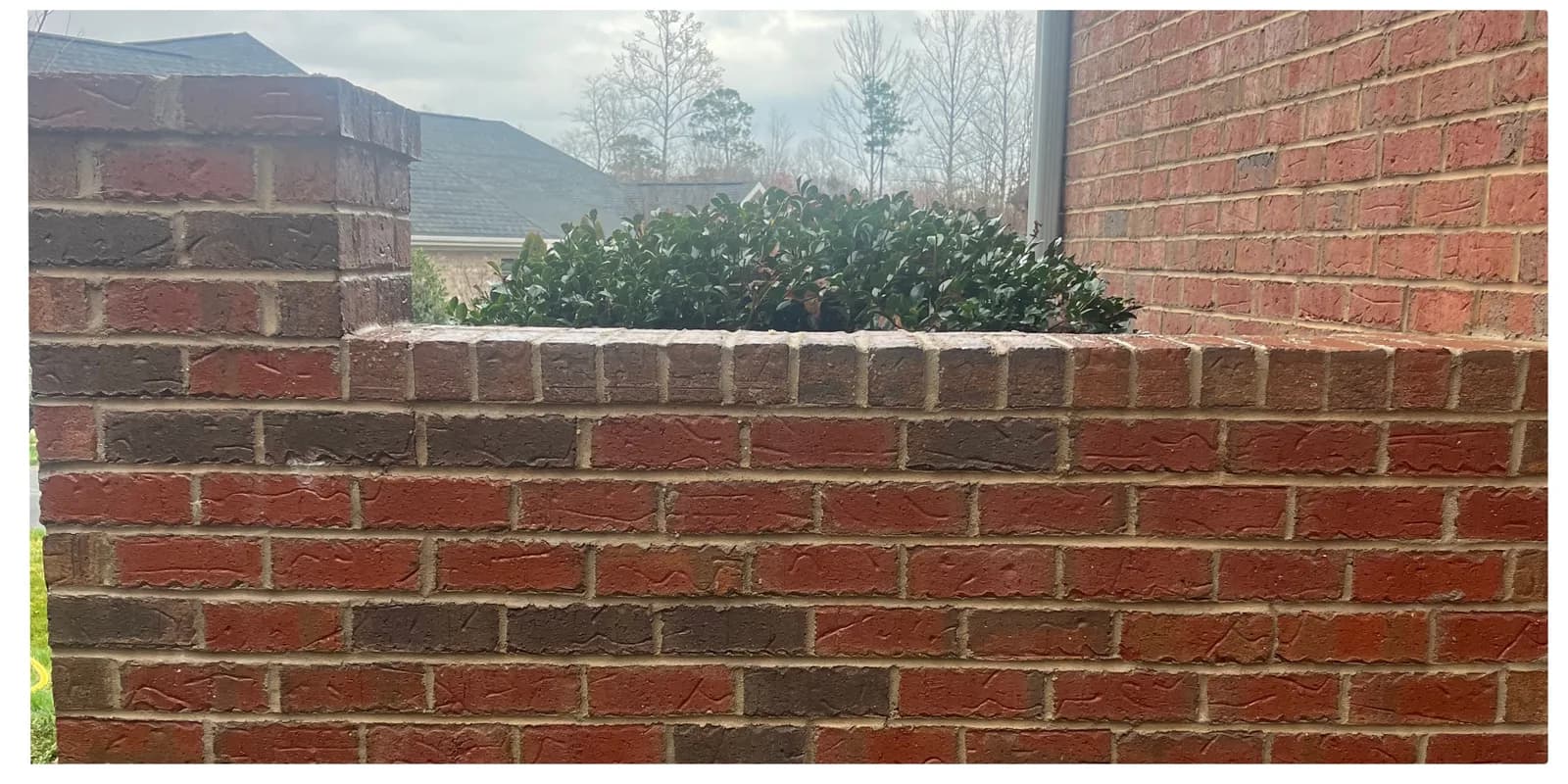
Brick is one of the most durable exteriors you can put on a home, which is why so many houses around Denver, NC and the Lake Norman area are built with it. But durable is not the same as self cleaning. Between the humidity that lifts off the lake, the heavy shade from our oaks and pines, and the pace of new construction out here, Denver brick picks up three very different kinds of staining, and each one needs a different fix.
This guide breaks down the green and black mold, the chalky white efflorescence, and the hazy film left on new construction brick, why each one shows up on homes in the 28037 area, and why a quick rinse never makes any of them stay gone.
The three problems you actually see on Denver brick
Most brick cleaning calls we get in Denver come down to one of three issues. They look similar from the street, but they have completely different causes:
- Green and black mold. The porous face of brick holds moisture, and in shaded, humid spots that moisture feeds algae and mildew. North facing walls and anything tucked under tree cover near the Lake Norman shoreline go green the fastest.
- White efflorescence. That chalky white bloom is not dirt. It is soluble salt that migrates out of the brick and mortar as water passes through, then crystallizes on the surface as it dries. It is most common on older brick and near grade where the wall wicks up ground moisture.
- Mortar haze. On new construction, a thin film of cement and lime from the mortar is left across the brick face during the build. If it is not cleaned off soon after the mortar cures, it bonds to the surface and dulls the whole elevation.
Why Denver homes get all three
Denver sits in a pocket of Lincoln County with lake driven humidity, mature hardwood and pine cover, and clay heavy soil, and that combination touches all three problems. The humidity and shade grow mold on brick the same way they grow algae on siding. The clay soil holds water against foundations, which drives the moisture movement behind efflorescence.
And because the west side of Lake Norman is building fast, a lot of Denver brick is new. Neighborhoods like Trilogy, Smithstone, and the newer sections of Westport and Verdict Ridge turn over with fresh construction, and new brick that was never cleaned after the build carries mortar haze from day one.
Why the stains keep coming back
The single most common thing we hear is that the brick was cleaned before and the green came right back within a few weeks. That happens because a plain pressure rinse only knocks the surface growth off. The mold is rooted in the pores of the brick, and what you cannot see regrows almost immediately.
The fix is chemistry first. A mildewcide kills the mold at the root so it does not simply regrow, which is the same reason our soft wash house washing lasts far longer than a quick blast with a wand. Efflorescence works the opposite way: more water can actually pull more salt to the surface, so it needs a specialized masonry treatment, not just scrubbing. Each problem has its own method, and using the wrong one is why DIY attempts so often disappoint.
Never pressure blast old brick or fresh mortar
High pressure is the wrong tool for most brick. Old or soft brick and aged mortar joints erode under a point tip wand, and once the mortar is gouged out you have an expensive repoint job instead of a cleaning. Newly laid brick is just as risky, since the joints have not fully reached strength.
The right approach matches pressure and chemistry to the age and condition of the wall. Mold gets a mildewcide and a gentle rinse. New construction haze gets a masonry detergent like NMD 80 that breaks down the lime binder so it washes away cleanly. Hard, sound brick can take more rinse pressure than soft or historic brick. Treating every wall the same is the mistake, and it is one we never make.
New construction brick: clean it sooner, not later
If you have just built or bought a new home in Denver, the timing on mortar haze matters more than almost anything else. Freshly cured mortar film comes off relatively easily in the first few weeks. Leave it through a season of sun and rain and it bonds harder to the brick, which turns an easy job into a slow, costly one.
If your builder did not clean the brick, or did a rushed pass that left a haze behind, it is worth getting it handled early. The same visit is a good time to deal with any concrete film or overspray left on the driveway and walkways during the build.
What our Denver brick cleaning includes
Our brick and masonry cleaning service starts with assessing the age of the brick, the condition of the mortar, and which of the three problems you actually have. From there we apply the matching treatment: a mildewcide for mold, a masonry detergent for new construction haze, and targeted chemistry for efflorescence. We hand scrape heavy mortar splatter where needed, rinse at a controlled pressure that is safe for your specific wall, and walk the full elevation for touch ups before we pack up.
We are a locally owned company based right here in Denver, and we work the 28037 ZIP every week. If you want the full picture of how we serve the area, see our Denver, NC service page, or request a free estimate and we will tell you exactly what your brick needs before any work starts.